How To Bring Customers Back To Your Restaurant
Bringing customers back to your restaurant is one of the fastest ways to increase revenue without constantly chasing new customers. Most restaurants already have customers who know the food, trust the business, and have visited before. The challenge is not awareness. The challenge is creating a reason to return.
Many restaurant owners focus heavily on attracting new customers while overlooking the value of existing customer relationships. A structured customer reactivation strategy can often generate faster results because the restaurant is communicating with people who already know the business.
Understanding how to bring customers back starts with understanding why customers stopped visiting in the first place.
Most Customers Are Not Permanently Lost
Restaurant owners often assume that customers who have not visited recently are gone forever.
In reality, many inactive customers are simply disconnected from the restaurant.
Customers become busy. Schedules change. New restaurants open. Dining habits shift.
The customer may still have positive feelings about the restaurant but simply has not found a reason to return.
This creates a significant opportunity for customer reactivation.
Why Customers Stop Returning
Most customers do not stop visiting because they suddenly dislike a restaurant.
Common causes include:
- Changing routines
- Customer forgetfulness
- Reduced visibility
- Competing dining options
- Lack of communication
- No compelling reason to return
Understanding these causes helps restaurants focus on retention solutions instead of assuming customer relationships are permanently lost.
Learn more through Why Customers Stop Returning.
Customer Reactivation Is The Fastest Path
Customer reactivation focuses on reconnecting with customers who have already visited the restaurant.
Unlike customer acquisition, reactivation does not require introducing the restaurant to someone new.
The relationship already exists.
The objective is creating a reason for the customer to come back.
Learn more through Restaurant Customer Reactivation.
Start With Existing Customer Data
The foundation of customer reactivation is customer information.
Many restaurants already possess customer records through:
- Reservation systems
- Online ordering platforms
- Loyalty programs
- Point-of-sale systems
- Previous campaigns
- Customer databases
This information allows restaurants to reconnect with people who have already demonstrated interest.
Learn more through How To Use Customer Data For Restaurant Marketing.
Create A Reason To Return
Customers rarely return simply because a restaurant hopes they will.
Successful reactivation campaigns create motivation.
Examples include:
- Limited-time offers
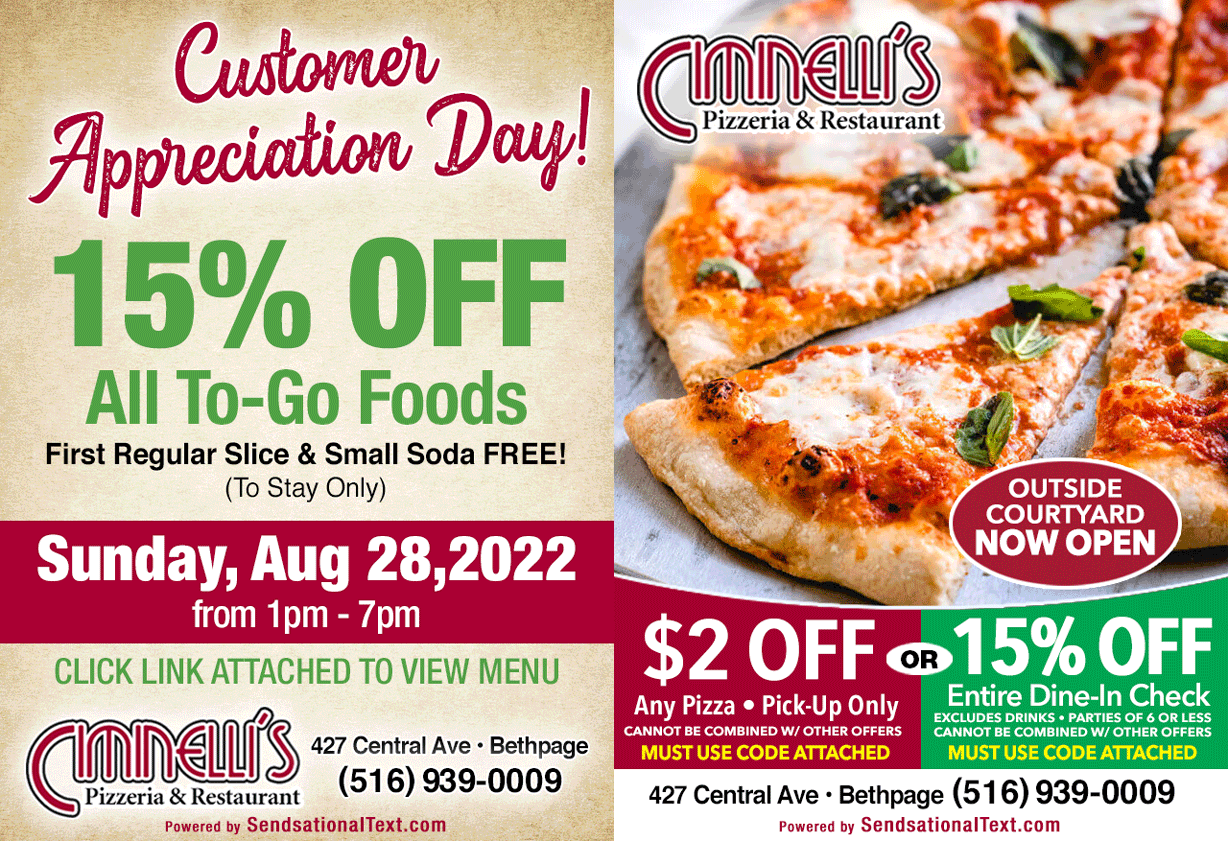
- Customer appreciation campaigns
- Seasonal promotions
- Special events
- Exclusive menu items
- Loyalty rewards
The goal is giving customers a specific reason to act now.
Visibility Matters More Than Most Owners Realize
Many restaurants suffer from a visibility problem rather than a quality problem.
Customers may enjoy the restaurant but simply forget about it.
Remaining visible between visits helps restaurants stay part of the customer's decision-making process.
Consistent communication often creates more opportunities for repeat visits.
Repeat Visits Create Long-Term Growth
The objective is not simply bringing customers back once.
The objective is creating repeat behavior.
Each additional visit strengthens:
- Customer relationships
- Customer loyalty
- Customer lifetime value
- Revenue stability
- Retention performance
Learn more through Restaurant Repeat Visit Campaigns.
Customer Retention And Customer Reactivation Work Together
Retention focuses on keeping customers active.
Reactivation focuses on bringing inactive customers back.
Together, these systems help restaurants reduce customer attrition and increase repeat revenue.
Restaurants that actively manage retention often experience stronger customer relationships and more predictable business performance.
Learn more through Restaurant Retention System.
Why SMS Marketing Is Effective For Bringing Customers Back
SMS marketing provides direct access to existing customers.
Unlike many advertising channels, SMS communication reaches people who already know the restaurant.
This makes SMS marketing highly effective for:
- Customer reactivation
- Repeat visit campaigns
- Special offers
- Customer appreciation programs
- Slow-night promotions
Learn more through Restaurant SMS Marketing.
Measurement Helps Improve Results
Restaurants should evaluate the effectiveness of reactivation efforts.
Important metrics include:
- Customer responses
- Offer redemptions
- Repeat visits
- Customer retention improvements
- Revenue generated
Measurement helps identify which campaigns produce the strongest outcomes.
Learn more through Restaurant Campaign Performance Metrics.
Common Mistakes Restaurants Make
Restaurants often struggle with reactivation because they:
- Wait too long to communicate
- Focus only on acquisition
- Lack customer data organization
- Use generic promotions
- Fail to track results
Addressing these issues improves the likelihood of successful customer return campaigns.
Building A Customer Return System
Successful customer return strategies are not isolated promotions.
They are repeatable systems built around:
- Customer data
- Customer visibility
- Reactivation campaigns
- Retention programs
- Performance measurement
When combined, these elements create a structured process for bringing customers back consistently.
How Sendsational Helps Bring Customers Back
Sendsational helps restaurants reconnect with inactive customers through customer reactivation campaigns, retention-focused SMS marketing, redemption tracking, customer data utilization, and measurable performance reporting.
The goal is helping restaurants turn existing customer relationships into repeat visits and repeat revenue.
Restaurants interested in learning more can explore Restaurant Customer Reactivation, review the Restaurant SMS Marketing Service, start a Free Trial, or Contact Sendsational.
Frequently Asked Questions
How do I bring customers back to my restaurant?
The most effective approach combines customer reactivation campaigns, retention strategies, direct communication, and meaningful reasons for customers to return.
Why do customers stop visiting restaurants?
Customers often stop visiting because routines change, competitors become more visible, or the restaurant is no longer top of mind.
What is customer reactivation?
Customer reactivation is the process of reconnecting with inactive customers and encouraging them to return.
Why is existing customer data important?
Customer data helps restaurants identify opportunities to reconnect with people who have already visited the business.
What incentives help bring customers back?
Special offers, loyalty rewards, events, customer appreciation campaigns, and exclusive experiences can encourage return visits.
How does SMS marketing help?
SMS marketing allows restaurants to communicate directly with existing customers and create immediate awareness of promotions and events.
How do repeat visits help restaurant growth?
Repeat visits increase customer lifetime value, improve retention, and create more predictable revenue.
How can Sendsational help?
Sendsational helps restaurants bring customers back through customer reactivation campaigns, retention systems, SMS marketing, and measurable performance tracking.
FAQ
How can a restaurant bring customers back?
A restaurant can bring customers back by reaching existing guests with a clear offer, text campaign, unique code, and easy redemption path.
Why focus on existing customers?
Existing customers already know the restaurant, which can make them easier to reactivate than cold prospects.
Do discounts work better than announcements?
Strong discounts and limited-time offers usually create more urgency than general announcements, although announcements can still support awareness.
How can a restaurant know if customers came back?
Sendsational can use unique codes and tablet-based tracking to help measure redemptions and campaign response.